
Published
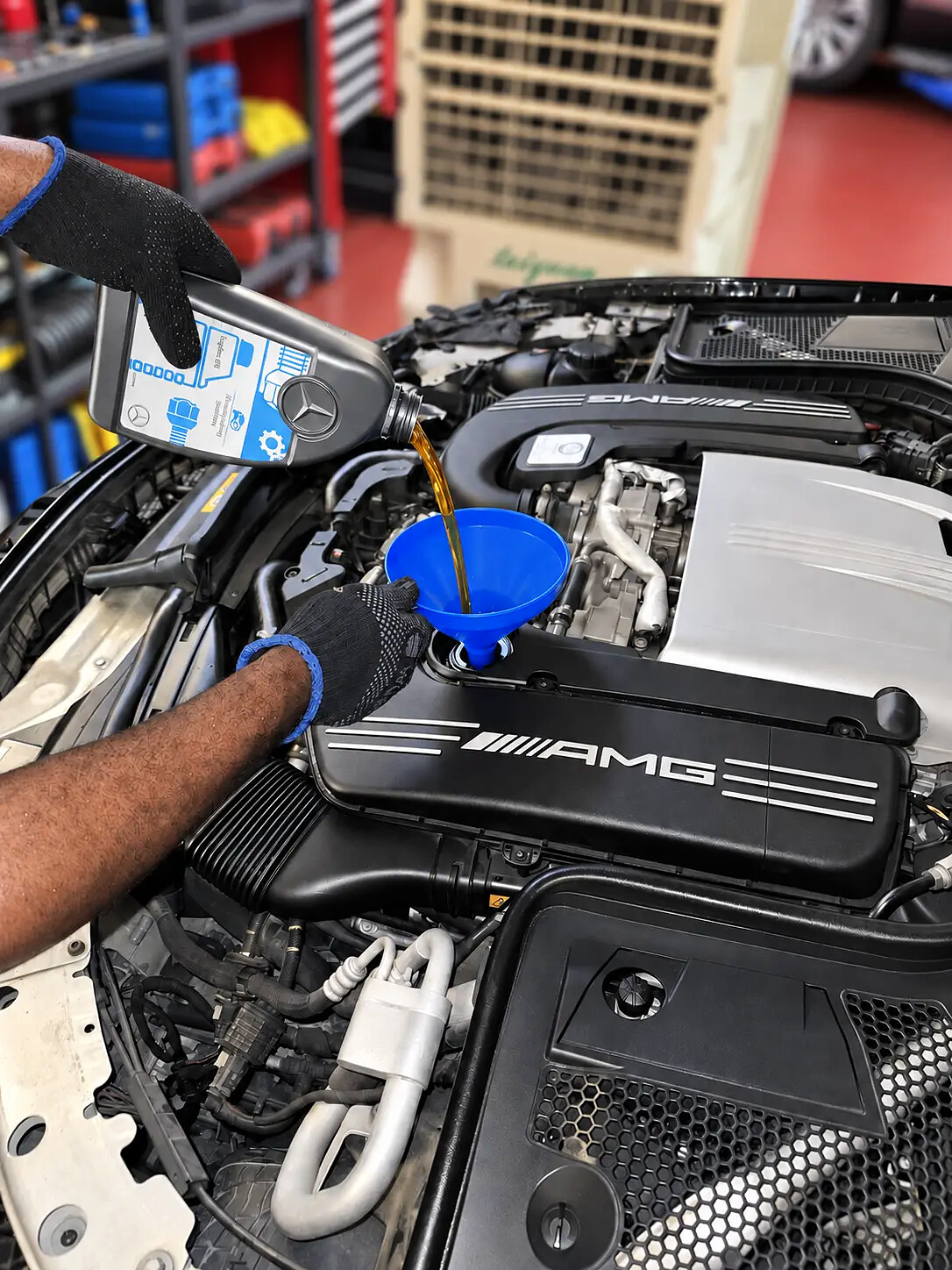
An oil leak often starts small: a few spots on the parking bay floor, a faint smell after a drive, or the oil level dropping a little faster than it used to. Because modern engines are tightly packaged, the place where oil appears is not always where it is coming from.
On BMW and Mercedes-Benz engines, as on other modern German engines, finding the true source matters. Replacing the wrong gasket costs time and leaves the real leak in place, while ignoring a leak can lead to bigger problems.
Signs of an oil leak
- Dark brown or black drips under the front of the car after it has been parked.
- A burning oil smell, especially after driving in traffic or when you stop.
- Light smoke rising from the engine bay.
- A low oil level message or the need to top up between services.
- Oily residue on the underside of the engine or gearbox.
Not every drip is engine oil. Coolant, gearbox oil, power steering fluid and AC condensation can also appear under the car, so identifying the fluid is the first step.
Common general sources on modern German engines
Leaks can come from many places, and the cause varies by engine and history. In general terms, the areas most often inspected include the valve cover gasket at the top of the engine, the oil filter housing and its gasket, the sump and its seal or drain plug, the front and rear crankshaft seals, and the oil cooler and its lines. These are descriptions of where leaks commonly occur on engines in general, not predictions for a particular model.
Why heat ages rubber seals
Gaskets and seals are made from rubber and similar materials that keep their flexibility for years, but sustained heat speeds up their ageing. Engine bays in Dubai summer traffic run hot, and over time seals can harden, shrink or crack, allowing oil to seep past them. Regular oil service visits are a good chance to look for early seepage before it becomes a drip.
Why a leak near the exhaust is a safety issue
Exhaust manifolds, turbochargers and catalytic converters reach very high temperatures. Oil that drips or sprays onto these parts can smoke and, in the worst case, ignite. If you see smoke from the engine bay or smell burning oil, stop somewhere safe, switch the engine off and have the car checked before driving further.
A low oil level is not just a top-up
Running an engine low on oil reduces lubrication and cooling, which can cause serious internal wear. Topping up keeps the car safe in the short term, but the reason the level is dropping still needs to be found. Some engines also use oil internally rather than leaking it, which is a different diagnosis.
How the real source is found
Oil travels. Airflow, gravity and engine movement spread it across nearby components, so the wettest area is not always the origin. A proper inspection starts by cleaning the affected area, then adding a fluorescent dye to the oil and running the engine. Under UV light, the dye shows exactly where fresh oil is escaping. This is part of a structured engine diagnostic approach, together with checking oil level history and any related warnings.
What to do in the meantime
Check the oil level regularly using the car's menu or dipstick, note any warnings and avoid driving if there is smoke or a strong burning smell. Do not keep topping up and hoping it stops; leaks rarely fix themselves.
What happens after the source is found
Once the leak is confirmed, you receive photos and video showing exactly where the oil is coming from, together with an explanation of what the repair involves. Some leaks are a single gasket or seal; others sit behind other components that need to come off first. Where a leak has soaked nearby parts, such as engine mounts, belts or wiring, those are checked too, because oil can soften rubber and damage insulation over time. After the repair, the area is cleaned again and rechecked, so any remaining seepage is easy to spot later. Genuine or OEM-quality gaskets and seals help the repair last, which matters more in a hot climate.
Leaks and the oil service schedule
A leak can also affect your service plan. If the oil level has been low, the oil may have worked harder than usual, and the next service may be due sooner. It is worth reviewing the service history and oil level readings together when the leak is repaired.
An oil leak is easier and safer to deal with when the true source is found early. Cost depends on the model and what the inspection finds; a fixed written quotation with photo and video evidence is provided before any work begins. If you have noticed drips, a burning smell or a low oil warning on your BMW or Mercedes-Benz, book an inspection at our workshop on 29th Street, Al Quoz Industrial Area 4, Dubai.