
Published
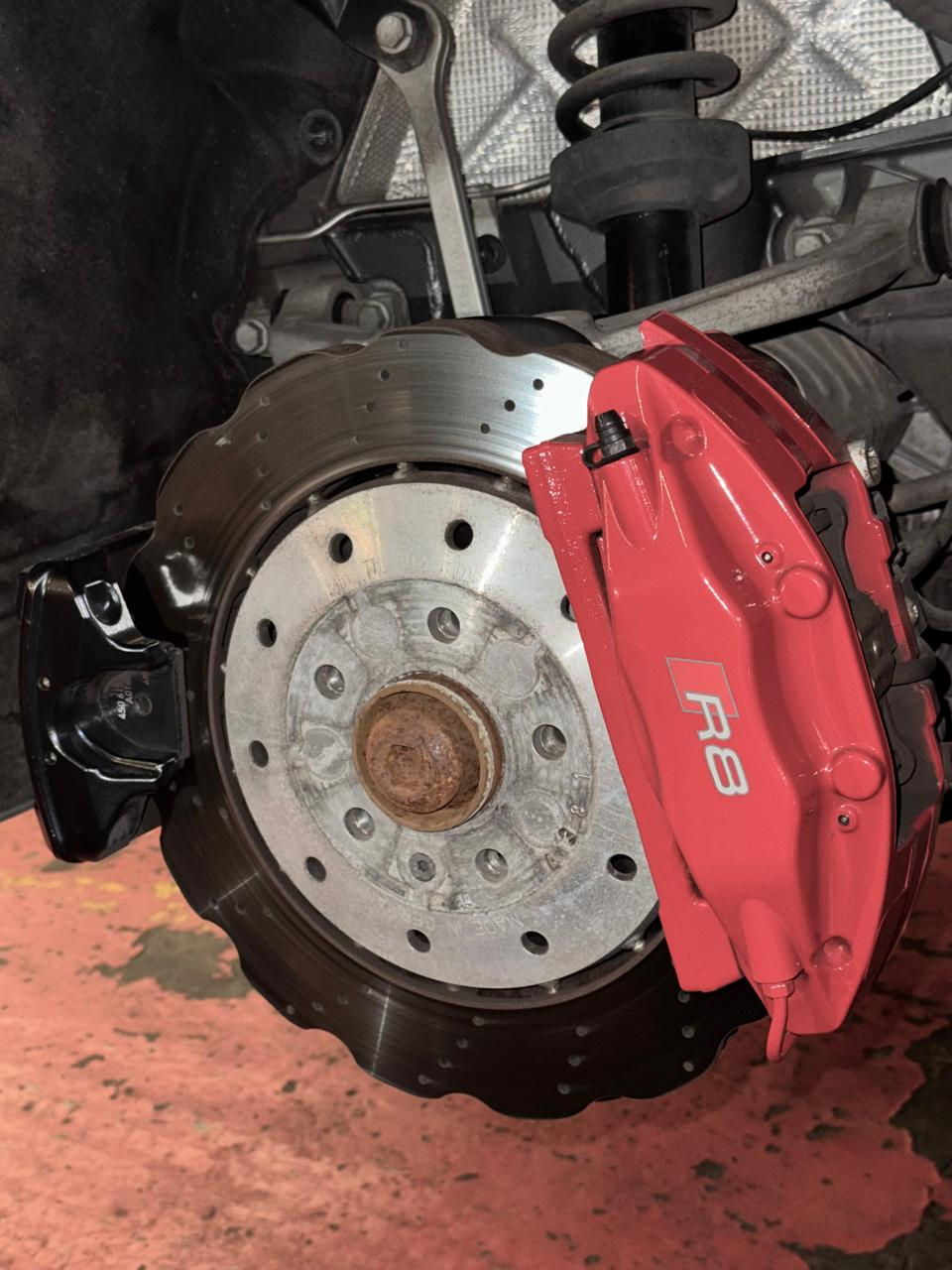
Brakes rarely fail without warning. Before most problems become serious, the car tells you something has changed: a new noise, a vibration through the pedal or steering wheel, or a tendency to pull to one side when you slow down.
German cars such as BMW, Mercedes-Benz, Audi and Porsche are built with strong, precise braking systems, but they are still wear parts. Understanding what each symptom usually means helps you decide how urgently to act, and helps the workshop find the cause faster.
Squealing: often pads or wear sensors
A high-pitched squeal when braking is one of the most common brake noises. It can come from pads that are worn, glazed by heat, or vibrating slightly against the disc. Many German cars also use electronic pad wear sensors that trigger a dashboard message when the pads reach their limit. If you see a brake pad warning, the sensor is usually replaced together with the pads. A light squeal on the first few stops on a humid morning can be normal; a squeal that stays or gets louder deserves a check.
Grinding: stop and get it checked
A harsh grinding or scraping sound usually means the friction material is worn very thin, or that something is trapped between the pad and disc. In the worst case, metal is touching metal, which damages the disc quickly and reduces braking performance. Grinding is a sign to stop driving the car normally and have the brakes inspected as soon as possible.
A pulsing pedal or steering wheel shake
If the brake pedal pulses under your foot, or the steering wheel shakes when you brake from speed, the discs are a common cause. Uneven disc thickness or deposits of pad material on the disc surface create a vibration each time the wheel turns. Worn suspension and steering parts can make the shake feel worse, so both systems are worth checking together. Note that ABS working on a slippery surface also causes a pedal pulse, which is normal.
Pulling to one side when braking
A car that pulls left or right under braking may have a caliper that is sticking, uneven pad wear between sides, a brake hose problem or contamination on one side. Tyre pressure and alignment can also play a part. Because pulling affects stability in an emergency stop, it should be inspected promptly.
Brake fluid and a soft pedal
Brake fluid absorbs moisture over time, which lowers its boiling point. Under heavy use the fluid can then form vapour, making the pedal feel soft or sink further than usual. A soft, spongy or sinking pedal, a low brake fluid warning or a red brake warning light all mean the car should not be driven until it has been checked. Replacing fluid at the interval set by the manufacturer is part of a proper brake service.
How Dubai heat and traffic affect brakes
Stop-start traffic on busy roads means repeated braking with little time for the brakes to cool, and high outside temperatures add to that heat. Over time this can glaze pads, affect disc surfaces and age brake fluid. Regular inspections let wear be caught early, before noise or vibration appears.
A word on carbon-ceramic brakes
Some high-performance models use carbon-ceramic discs. They behave differently from steel discs, are wear-checked in a different way and need parts and procedures specified by the manufacturer. If your car has them, make sure the inspection follows that guidance rather than treating them like standard discs.
What a proper brake inspection covers
A useful inspection goes beyond listening to the noise. The wheels come off so pad thickness can be measured on both sides of each axle, and the discs are checked for thickness, surface condition and run-out. Calipers are checked for free movement, slide pins for lubrication and hoses for cracks or swelling. Brake fluid condition is tested, and the car is road-tested to reproduce the symptom you described. Any fault codes from the ABS and stability systems are read as well, because on modern German cars these systems work closely with the brakes. You then see photos and video of what was found, with a clear explanation of what is urgent and what can be planned for later.
Simple habits that help your brakes
Leave a little more distance in traffic so you can brake gently rather than hard, and avoid resting your foot on the pedal. After a fast drive or a long downhill, let the brakes cool with some easy driving before parking. Small habits like these reduce heat and help pads and discs wear evenly.
Brake noise and vibration are the system asking for attention, and catching them early keeps the repair simple and the car safe. Cost depends on the model and what the inspection finds; a fixed written quotation with photo and video evidence is provided before any work begins. If your car is squealing, grinding, shaking or pulling under braking, book an inspection at our workshop on 29th Street, Al Quoz Industrial Area 4, Dubai.